ServicesRoof Replacement
Roof Replacement in Stroud, OK
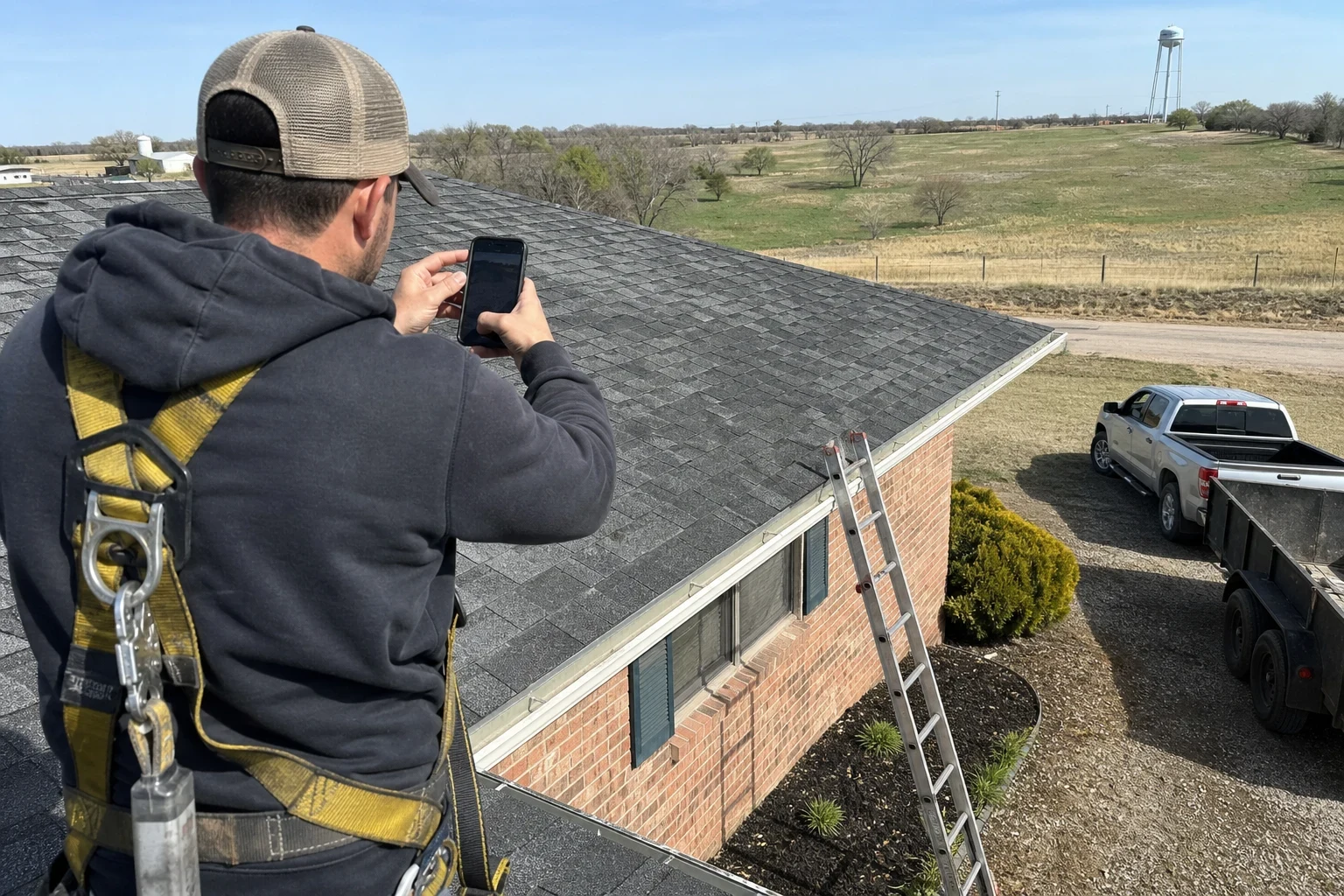
When patching no longer makes sense, we take your roof down to the deck and build it back right. You get an honest answer on repair versus replacement, photos of what we find, and plain help understanding your insurance claim if storm damage is involved.
When a new roof is the right answer
Replacing a roof means stripping it to the wood deck and rebuilding the whole system on top: underlayment, flashing, ventilation and shingles. Because it is a major investment, our first job is telling you honestly whether your home needs one. Many roofs just need a roof repair, and you will hear that from us.
A new roof is usually the better choice when wear shows on most of the shingles, when leaks keep popping up in fresh spots, or when hail and wind have hit several slopes at once. One hard spring storm can leave a roof in that shape by evening.
When a storm is involved, we help you document the damage and explain the usual path a claim takes from inspection to approval. We do not act as your adjuster, and we will not guess at what your policy covers. You get clear photos, measurements and a written scope, so you and your insurer are working from the same information.
What a replacement with us includes
Full tear-off to the deck
We remove the old shingles, underlayment and worn flashing. Roofing over an old layer hides problems and adds weight, so we begin from bare wood.
Deck inspection and wood replacement
Once the old roof is off, the crew goes over the bare sheathing sheet by sheet, feeling for soft or rotted spots. Anything that fails gets swapped for new wood, and you get photos of it first so the reason is clear.
Underlayment and leak barrier
Synthetic underlayment covers the whole deck. Valleys, eaves and areas around pipes and chimneys get a self-sealing membrane, because those are the places water reaches first.
New flashing and ventilation
New drip edge, step flashing, pipe boots and ridge or box vents go in. Steady attic airflow matters through hot Oklahoma summers, since heat trapped under the deck ages shingles from below.
Shingles installed to spec
Starter strips, the correct nail count in the correct spots, and ridge caps that are sealed down. These small details decide how well a roof holds up in strong wind.
Cleanup and nail pickup
Tarps cover flower beds and shrubs before tear-off begins. When we finish, all the debris leaves with us, and a rolling magnet goes over the lawn and driveway to pick up stray nails.
Signs your roof may need replacing
- Granules in the gutters
- Aging shingles lose their sandy top coat. Little drifts of grit near the downspouts often mean the asphalt below is bare and breaking down quickly.
- Curling, cracked or missing shingles
- A handful of loose shingles can be repaired. Curled and cracked shingles on every side of the roof suggest it is close to worn out.
- Leaks in more than one spot
- A single leak is often fixable. Water stains turning up in several rooms tell us the roof is giving way in multiple places.
- Hail bruising across the roof
- Dark dents, cracked mats and split shingles after a storm may be grounds for a claim. A roof inspection with photos is a smart step before you contact your insurer.
- Sagging or soft spots
- A roofline that dips, or decking that gives when someone walks on it, usually points to water soaking into the wood. It should be looked at before the rot spreads further.
How the job goes, start to finish
- 1
Inspection and photos
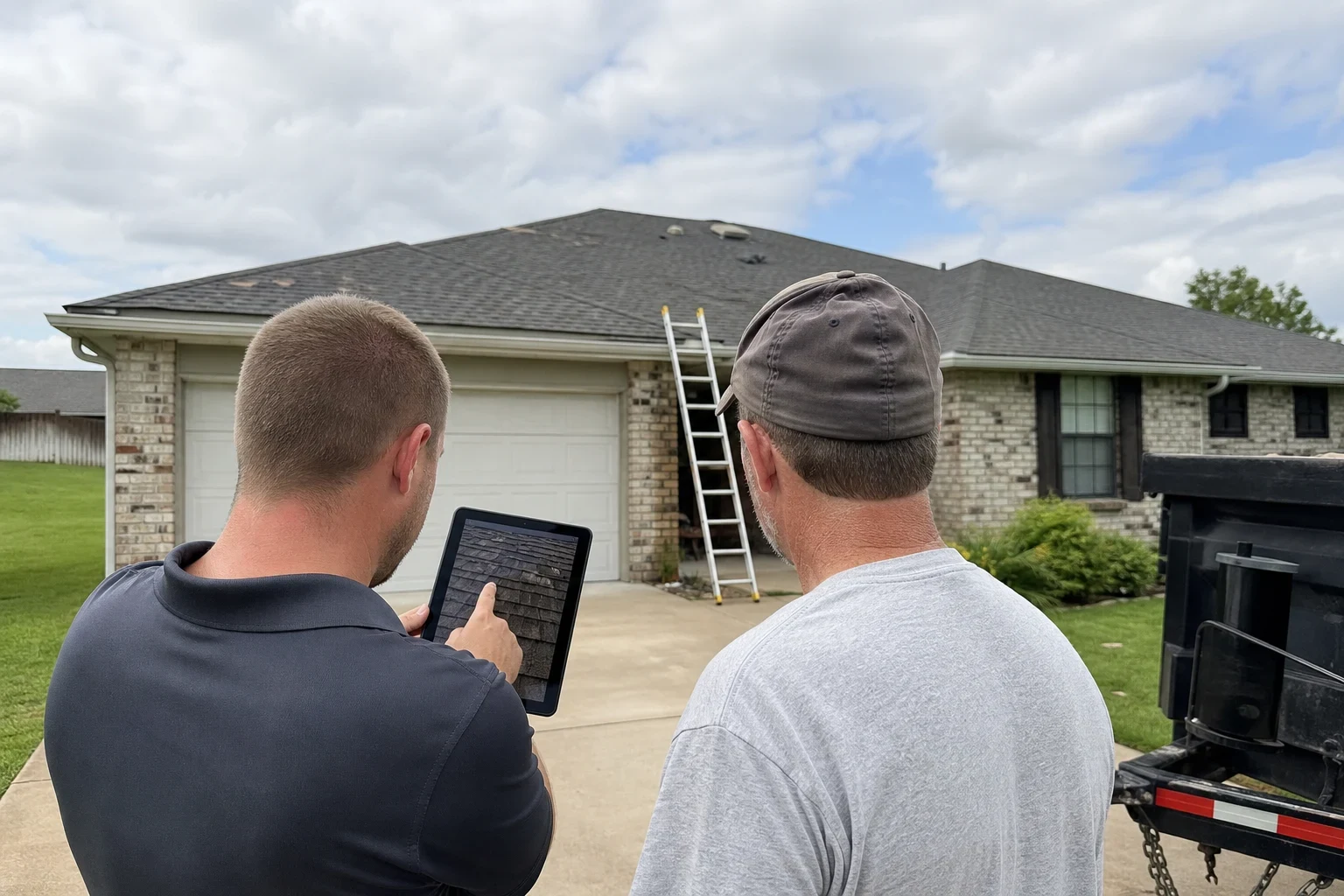
We go up on the roof, check the attic if we can, and photograph what we find. You hear our honest read on repair versus replacement before anything else.
- 2
Written scope and claim help
You get a line-item scope listing materials, measurements and any decking we expect to replace. If insurance is involved, we explain the usual steps and can meet your adjuster to point out the damage.
- 3
Scheduling and prep
We set a date around the weather, deliver materials, and handle any permit the city requires. On the morning of the job we protect plants, AC units and walkways.
- 4
Tear-off and install
Most homes are finished in one to three days depending on size, pitch and weather. We dry in each section the same day it is opened up.
- 5
Final walk-through
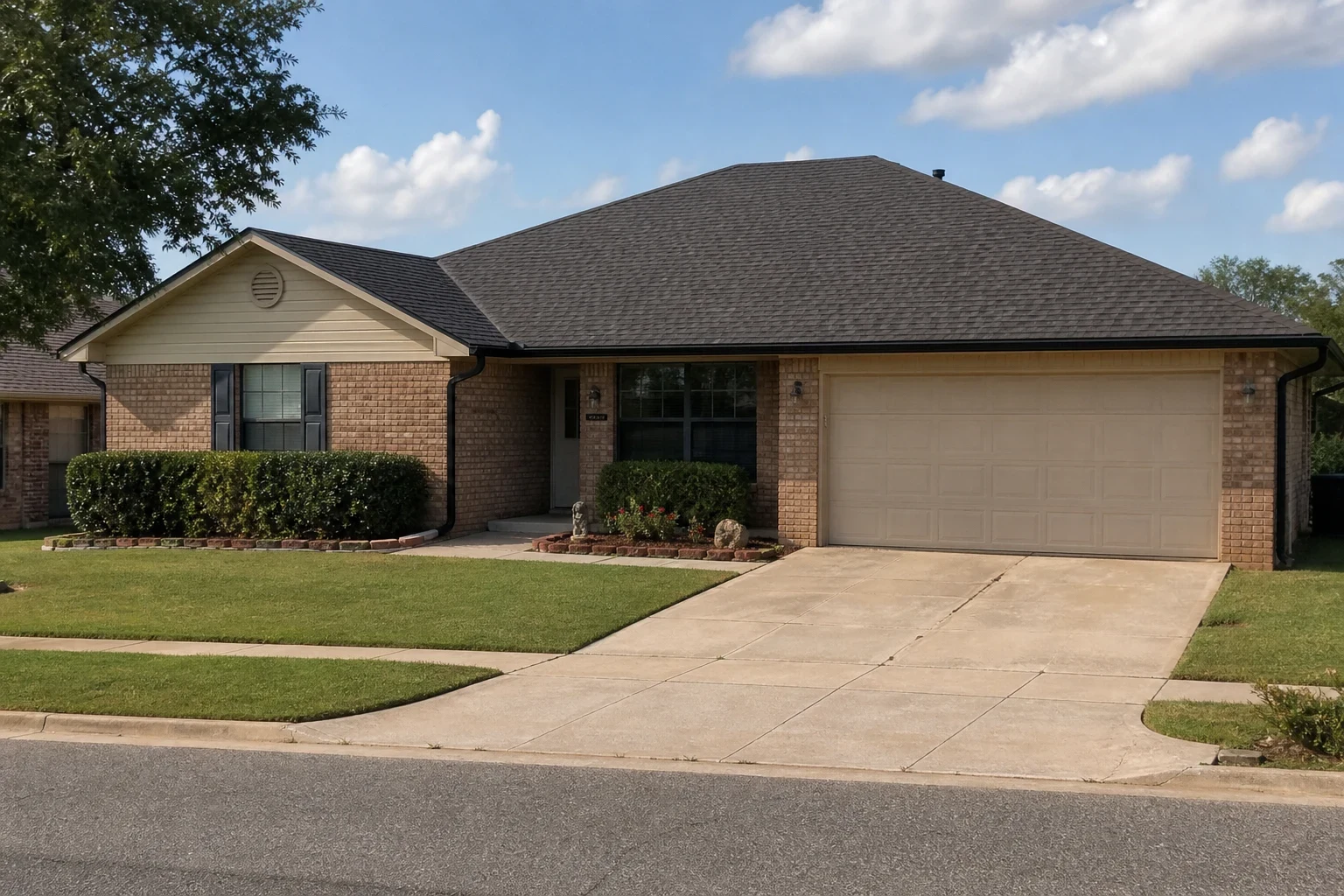
We walk the property with you, sweep for nails, and go over photos of the finished work so you have a record for your files and your insurer.
What moves the price of a new roof
Every roof prices out differently, because each one has its own measurements, slope and hidden condition under the shingles. That is why we look at yours in person before writing anything down. Your written scope lists the job line by line, so you can see where each part of the cost comes from. These are the factors that matter most.
- Roof area and slope
- More square footage means more shingles, more underlayment and more time on the roof. A steep pitch slows the crew down and requires harnesses and extra safety setup, which adds labor.
- Old layers coming off
- Stripping two or three stacked layers takes more hands and fills more dumpsters than removing one. We count the layers during the inspection so it shows up in your scope from the start.
- Decking condition
- Soft or rotted sheathing gets replaced sheet by sheet. Nobody can know the exact number until the old roof is off, so we photograph every sheet we change.
- Shingle choice
- Standard architectural, impact-rated and premium shingle lines each carry a different price. Some insurers offer a discount for impact-rated roofs, so it is worth asking your agent before you choose.
- Vents, chimneys and skylights
- Each opening in the roof needs its own flashing work. A simple roof with few penetrations takes less time to do right than one with many cuts, valleys and angles.
Roof replacement questions
- Will my insurance pay for a new roof?
- That depends on your policy and whether the damage came from a covered event such as hail or wind. Ordinary aging and wear usually are not covered. We record the damage with photos and measurements and explain how claims typically move along, but the decision belongs to your insurer.
- Should I repair or replace my roof?
- If the trouble is limited to one section and the remaining shingles still have life in them, fixing that section is usually money better spent. If wear or storm damage covers most of the roof, a replacement saves you from paying for one repair after another. We will show you the photos and tell you which way we would go and why.
- Can you put new shingles over my old ones?
- We recommend a full tear-off. Laying new shingles on top of old ones hides soft decking and failing flashing, adds weight to the framing, and can shorten the life of the new roof. Some insurers and manufacturers also prefer a single layer.
- Do I need to be home during the work?
- Not the whole day. We like to see you when the crew arrives and again for the final walk-through. Tear-off is loud, so expect noise, and you may want to park off the driveway and take pictures or mirrors down from the walls inside.
- What happens if you find rotted wood?
- We stop, take photos and let you know before any sheet is replaced. Your scope explains how decking is handled, so the final bill lines up with what you were told.
Find out where your roof really stands
Starting is as simple as a phone conversation. Describe what you have noticed, from stains to missing shingles, and we will pick a time to come look at your roof in Stroud, Chandler, Cushing or close by.