ServicesCommercial Roof Replacement
Commercial Roof Replacement in Stroud, OK
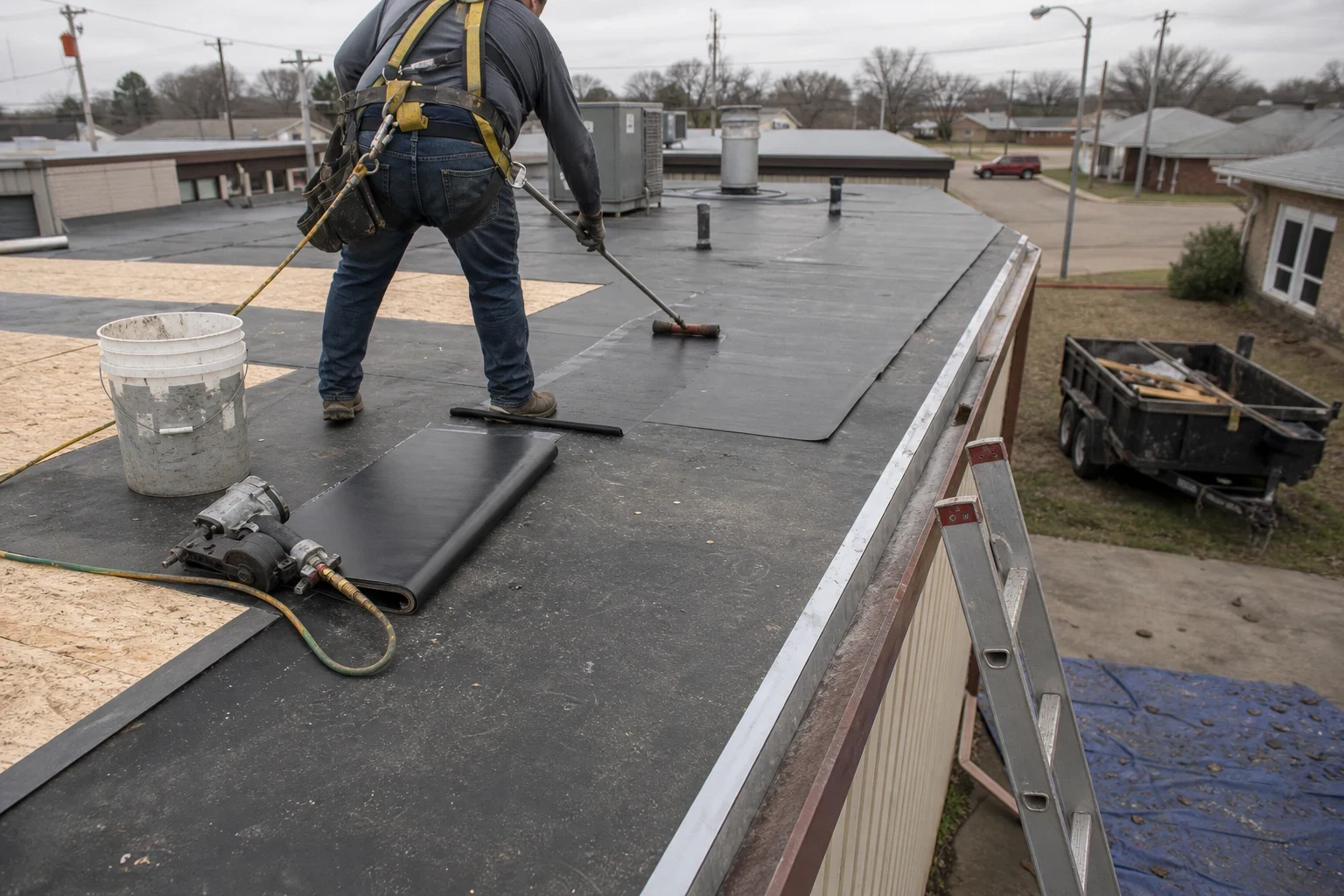
When patching a flat or low-slope roof stops working, we replace it with a system matched to your building and your budget. You get a written scope, clear photos of what we found, and straight answers about whether insurance may play a part.
When a New Commercial Roof Makes Sense
Most commercial roofs fail slowly. Seams open, insulation soaks up water, and repairs that used to last years start lasting months. At some point the money going into patches would be better spent on a roof that drains properly and stays dry.
We look at the whole assembly before recommending anything, from the membrane down to the deck. Sometimes the honest answer is a targeted fix through our commercial roof repair service. When replacement is the right call, we explain why, show you the evidence, and lay out the options in plain language.
If hail or wind is behind the damage, we photograph and document it so you have something solid to hand your insurance adjuster. We explain how the claim process usually works, but the adjuster makes the coverage decision, and we will not promise an outcome we cannot control.
What Your Replacement Includes
Core samples and moisture check
We cut small samples to see how many layers are up there and whether the insulation is wet. That answer decides whether a full tear-off is needed or a recover is allowed.
System choice explained
We walk you through TPO, EPDM, modified bitumen and metal options for your building. Each behaves differently in summer heat and hail, and we tell you the tradeoffs without pushing the most expensive one.
Drainage corrected
Ponding water shortens a roof's life. Where it helps, we add tapered insulation and rework drains, scuppers and gutters so water leaves the roof instead of sitting on it.
Flashing at every penetration
Rooftop units, vents, pipes and parapet walls are where most leaks start. We rebuild the flashing and curbs at each one rather than tying new membrane into old details.
Permit and cleanup
We pull the permit where it is required and haul away all tear-off debris. Magnetic sweeps of the parking lot and walkways happen before we leave each day.
Signs Your Building Needs a New Roof
- Leaks keep coming back
- If the same area leaks after two or three repairs, the problem is usually wet insulation or a failing membrane, not a single hole.
- Water stands for days
- Puddles that remain 48 hours after rain point to sagging insulation or poor slope. Standing water speeds up membrane breakdown.
- Seams and blisters
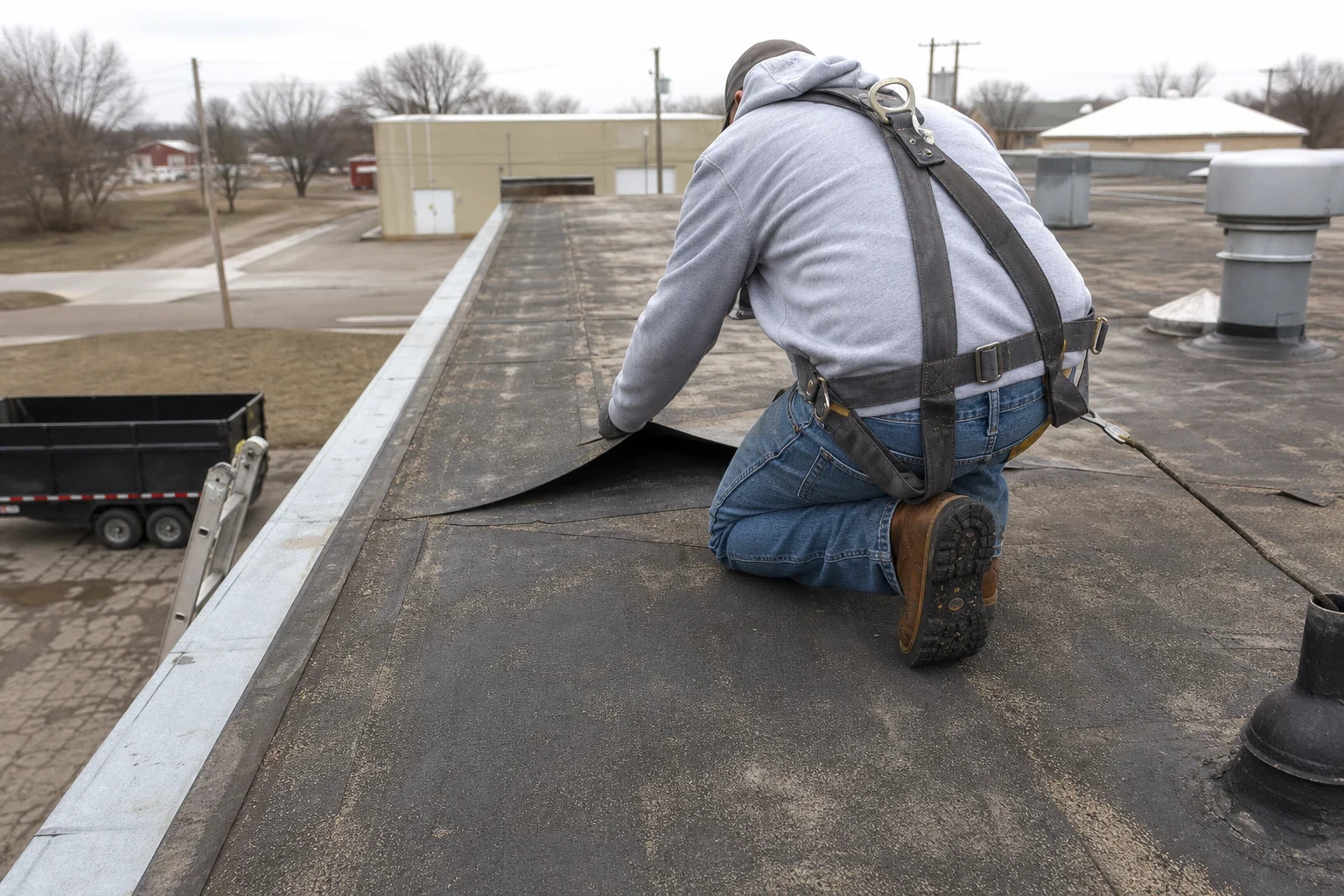
- Open seams on single-ply roofs or blisters and cracking on built-up and modified bitumen roofs mean the surface is near the end of its service life.
- Hail bruising or punctures
- Hail can fracture membranes and dent metal panels in ways that are hard to see from the ground. Damage like this is worth documenting before any claim is filed.
- Stained ceiling tiles
- Brown rings on drop ceilings or rust on deck panels from inside tell you water has been getting through for a while.
How a Commercial Replacement Runs
- 1
Walk the roof together
We inspect the roof, take core samples and photograph everything. You get a written, line-item scope that shows what we found and what we recommend.
- 2
Sort out insurance first
If storm damage is involved, we hand you our photos and notes so you can file the claim. When the adjuster schedules a visit, we are glad to be up there too, showing the damaged areas we recorded.
- 3
Schedule around your business
We plan staging, crane or lift access and noisy tear-off work to keep customers and staff safe and your doors open. Sections are dried in before we leave each day.
- 4
Install and inspect
New insulation, membrane and flashing go on in sections. We walk the finished roof with you and check every drain and seam before calling it done.
What Shapes the Price
No two commercial roofs are priced the same way, because each one starts from its own measurements and conditions. Our written estimate breaks the job into separate line items, from tear-off to flashing, so nothing is lumped together. When a storm claim is part of the picture, that itemized list also makes it easier to line our numbers up against the adjuster's report.
- Roof size and shape
- Square footage matters, but so do parapets, roof levels and the number of rooftop units and penetrations to flash.
- Tear-off or recover
- Building code limits how many layers a roof can carry. Wet insulation or existing layers often mean a full tear-off, which adds labor and disposal.
- System and insulation
- Membrane type and thickness change the cost, and so does the amount of insulation needed to meet energy code and fix drainage.
- Deck condition
- Rusted metal deck or rotted wood usually stays hidden until the old layers are stripped away. If we uncover it, you see the photos and we go over your options together before any new decking goes down.
- Access and scheduling
- Tight lots, crane needs and after-hours work to keep your business running can all affect the final number.
Commercial Roof Replacement Questions
- Can we stay open while you replace the roof?
- In most cases, yes. We work in sections, keep the active area roped off below, and plan the loudest tear-off around your busiest hours. We talk through the schedule with you before work starts.
- Can you install the new roof over the old one?
- Sometimes. A recover is possible when there is only one existing layer and the insulation below is dry. Our core samples tell us which situation you have, and we show you the results.
- Will insurance pay for our new roof?
- That depends on your policy and what the adjuster finds. Our part is documenting the damage clearly with photos and measurements, explaining how the process usually goes, and being on the roof when the adjuster visits if you want us there. We never tell you a claim will be approved.
- Which roofing system is best for our building?
- It depends on the roof's slope, what sits on top of it and how long you plan to own the building. TPO and EPDM suit many flat roofs, while metal works well on low-slope buildings. We explain the options and recommend the one that fits, not the priciest.
- Do you also handle home roofs?
- Yes. Our Roof Replacement and Storm Damage Repair pages cover residential work if your own house needs attention too.
Let's Look at Your Building's Roof
Tell us what you are seeing, from leaks to hail damage. We will set a time to inspect, take samples and give you a written scope you can actually read.